As a supplier of FRP (Fiber Reinforced Plastic) rectangular tubes, I've witnessed firsthand the growing demand for these products in various industries. One question that often arises is how FRP rectangular tubes perform in low - temperature environments. In this blog, I'll delve into the characteristics of FRP rectangular tubes and their behavior under low - temperature conditions.
Understanding FRP Rectangular Tubes
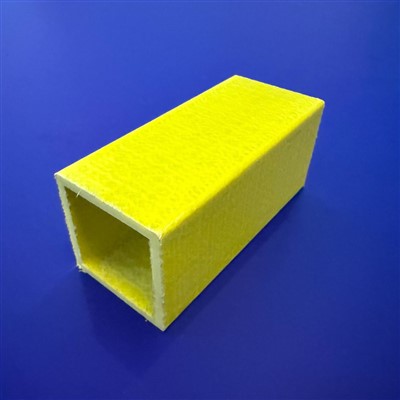
FRP rectangular tubes are composite materials made of fibers (usually glass fibers) and a polymer matrix (commonly polyester, vinyl ester, or epoxy resin). These tubes offer several advantages over traditional materials such as steel and aluminum. They are lightweight, corrosion - resistant, have high strength - to - weight ratios, and are electrically non - conductive.
The manufacturing process of FRP rectangular tubes involves pultrusion, a continuous process where fibers are impregnated with resin and pulled through a heated die to form the desired shape. This process results in a product with consistent quality and properties throughout its length.
General Properties of FRP in Low - Temperature Environments
Before discussing the specific performance of FRP rectangular tubes, it's important to understand the general behavior of FRP materials in low - temperature settings.
Brittleness
One of the main concerns with FRP in low - temperature environments is an increase in brittleness. As the temperature drops, the polymer matrix becomes stiffer, and the material's ability to absorb energy through deformation decreases. This means that FRP may be more prone to cracking or fracturing under impact or stress at low temperatures.
However, the degree of brittleness depends on the type of resin used. For example, epoxy - based FRP generally has better low - temperature performance compared to polyester - based FRP. Epoxy resins have a higher glass transition temperature (Tg), which is the temperature at which the resin changes from a hard, glassy state to a more rubbery state. A higher Tg means that the epoxy - based FRP can maintain its mechanical properties at lower temperatures.
Dimensional Stability
FRP materials typically have good dimensional stability in low - temperature environments. The coefficient of thermal expansion (CTE) of FRP is relatively low compared to metals. This means that FRP rectangular tubes will experience less shrinkage or expansion when exposed to temperature changes. As a result, they are less likely to warp or distort, which is crucial for applications where precise dimensions are required.
Corrosion Resistance
One of the key advantages of FRP is its excellent corrosion resistance, and this property remains intact in low - temperature environments. Unlike metals, which can rust or corrode when exposed to moisture and cold, FRP rectangular tubes are not affected by rust or oxidation. This makes them ideal for use in harsh outdoor environments, such as in cold climates where snow and ice can cause corrosion on metal structures.
Performance of FRP Rectangular Tubes in Low - Temperature Applications
Structural Integrity
In low - temperature applications, the structural integrity of FRP rectangular tubes is of utmost importance. When used in load - bearing structures, such as in bridges or building frames, the tubes need to maintain their strength and stiffness.
Tests have shown that FRP rectangular tubes can retain a significant portion of their strength at low temperatures. For example, in some cases, the flexural strength of FRP tubes may only decrease by 10 - 20% at temperatures as low as - 40°C. This is due to the high - strength fibers in the composite, which continue to provide reinforcement even when the resin becomes stiffer.
However, it's important to note that the design of the structure using FRP rectangular tubes needs to take into account the potential increase in brittleness. For example, the joints and connections between the tubes should be designed to minimize stress concentrations, as these can lead to cracking at low temperatures.
Thermal Insulation
FRP rectangular tubes also offer good thermal insulation properties, which are beneficial in low - temperature environments. The low thermal conductivity of FRP means that it can help reduce heat transfer, keeping the interior of a structure warmer. This is particularly useful in applications such as cold storage facilities or in buildings located in cold regions.
Impact Resistance
As mentioned earlier, the brittleness of FRP increases at low temperatures, which can affect its impact resistance. However, proper design and material selection can mitigate this issue. For example, adding a layer of a tough, impact - resistant resin or using a hybrid fiber system can improve the impact resistance of FRP rectangular tubes in low - temperature environments.
Comparing with Other FRP Products
When considering the performance of FRP rectangular tubes in low - temperature environments, it's interesting to compare them with other FRP products such as FRP Square Tube, FRP Flat Bar, and FRP Solid Rod.
FRP Square Tube
FRP square tubes have similar properties to rectangular tubes in terms of low - temperature performance. However, the square shape may provide different stress distribution patterns, which can affect the structural integrity under load. In some cases, square tubes may be more suitable for applications where equal strength in all directions is required.
FRP Flat Bar
FRP flat bars are often used for applications such as bracing or as structural components. In low - temperature environments, they may be more prone to bending or buckling due to their relatively flat shape. However, their high strength - to - weight ratio still makes them a viable option for many applications.
FRP Solid Rod
FRP solid rods are typically used for applications such as dowels or as reinforcement in concrete structures. They have excellent axial strength and can perform well in low - temperature environments. However, their round shape may limit their use in applications where a rectangular or square cross - section is required.
Applications in Low - Temperature Environments
There are several industries where FRP rectangular tubes are used in low - temperature environments:
Construction
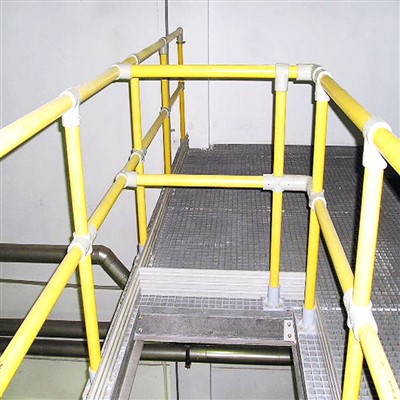
In cold regions, FRP rectangular tubes can be used in building frames, roofing structures, and handrails. Their corrosion resistance and dimensional stability make them a long - lasting alternative to traditional metal materials.


Transportation
In the transportation industry, FRP rectangular tubes can be used in the construction of trailers, railway carriages, and aircraft components. Their lightweight nature helps reduce fuel consumption, while their performance in low - temperature environments ensures the safety and reliability of the vehicles.
Energy
In the energy sector, FRP rectangular tubes are used in wind turbine blades, offshore platforms, and power transmission towers. These applications often require materials that can withstand extreme weather conditions, including low temperatures.
Conclusion
In conclusion, FRP rectangular tubes can perform well in low - temperature environments, provided that proper design and material selection are made. Their advantages such as corrosion resistance, dimensional stability, and thermal insulation make them a suitable choice for a wide range of applications in cold climates.
If you're considering using FRP rectangular tubes for your project, especially in a low - temperature environment, I encourage you to reach out to discuss your specific requirements. Our team of experts can provide you with detailed information and guidance to ensure that you get the best - suited product for your needs.
References
- “Fiber - Reinforced Polymer Composites: Materials, Manufacturing, and Design” by Daniel V. Rosato, Dominick V. Rosato, and Ronald A. Schmitz.
- “Handbook of FRP Composites in Civil Engineering” edited by Subhash C. Jain and Anil K. Agrawal.
- Technical reports from leading FRP manufacturers on low - temperature performance of their products.