Product Overview
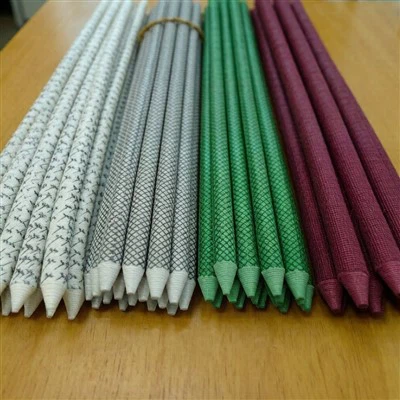
FRP ladder rail profiles are structural composite channels and hollow sections manufactured via the thermal pultrusion process. Continuous E-glass rovings and continuous filament mats (CFM) are impregnated with thermosetting resin matrices (Isophthalic Polyester or Vinyl Ester) and pulled through a heated steel die to achieve complete polymerization.
Engineered specifically for industrial extension, step, and fixed access ladders, these profiles replace traditional aluminum and steel stringers in environments requiring complete electrical non-conductivity and high resistance to electrochemical corrosion. Standard resin formulations incorporate UV inhibitors and surface veils to prevent environmental degradation during outdoor service across utility, chemical, and marine sectors.
-
![Fiberglass Straight Ladder]() Fiberglass Straight LadderThis fiberglass straight ladder is specially customized for scenarios such as power, chemical, and municipal works! It fundamentally solves the pain points of metal ladders, such as conductivity and easy corrosion. The insulated and...view more
-
![FRP Cage Ladder]() FRP Cage LadderThis is an FRP cage ladder specially customized for industrial platforms, storage tanks, and high - rise buildings! It mainly solves the risk of falling during high - altitude operations. The fully enclosed protective design ensures...view more
-
![FRP Step Ladder]() FRP Step LadderThis FRP step ladder is specially customized for household and industrial scenarios! It addresses the pain points of traditional ladders, such as being heavy, slippery, and prone to corrosion. Its portable climbing design is suitable...view more
-
![FRP Fixed Ladders]() FRP Fixed LaddersFRP fixed ladders specially customized for industrial platforms, building exteriors, and storage tanks! They fundamentally solve the pain points of traditional fixed ladders, such as easy corrosion and difficult maintenance. The...view more


Technical Specifications
|
Parameter |
Specification Value |
Testing / Compliance Standard |
|
Manufacturing Method |
Thermal Pultrusion |
|
|
Reinforcement Materials |
E-Glass Continuous Rovings & Continuous Filament Mat (CFM) |
ASTM D5733 |
|
Resin Matrix Options |
Isophthalic Polyester / Vinyl Ester (Flame Retardant grade available) |
ASTM E-84 (Flame Spread Index ≤ 25, Class 1) |
|
Glass Content (by weight) |
60% - 65% |
ASTM D2584 |
|
Density |
1.70 - 1.90 g/cm³ |
ISO 1183 |
|
Longitudinal Tensile Strength |
≥ 290 MPa |
ASTM D638 |
|
Flexural Strength |
≥ 280 MPa |
ASTM D790 |
|
Izod Impact Strength (Unnotched) |
≥ 200 kJ/m² |
ISO 180 |
|
Dielectric Breakdown Voltage |
≥ 30 kV (tested across 300 mm span) |
ASTM D149 |
|
Standard Lengths |
5.8m, 6.0m (Custom cutting available) |
|
|
Dimensional Tolerances |
Length: ± 3.0 mm / Wall Thickness: ± 0.2 mm |
Internal Quality Control Standard |

High Strength-to-Weight Ratio: Delivers structural rigidity comparable to structural steel while weighing approximately 75% less, lowering the overall dead load of portable extension ladders.
Dielectric Insulation: Non-conductive material construction eliminates electrical shock hazards, satisfying safety requirements for live-line utility maintenance tools.
Corrosion Resistance: Withstands exposure to concentrated industrial acids, caustic agents, salts, and moisture without rust formation or galvanic corrosion.
Dimensional Stability: Low thermal expansion coefficients (8-12 × 10⁻⁶ / degrees C) minimize profile twisting and warping across operating temperatures from -40 degrees C to +80 degrees C.
Extension & Straight Ladders: Structural side rails for industrial-grade fiberglass extension ladders used by electrical and telecommunication line workers.
Platform & Step Ladders: Vertical uprights and load-bearing channels for self-supporting portable access equipment.
Chemical Plant Access Systems: Fixed safety ladders, vertical cage stringers, and crossover platforms installed in corrosive processing facilities.
Railway & Substation Infrastructure: Non-conductive structural access components deployed near electrified rail lines and high-voltage perimeters.

OEM/ODM & Customization Capabilities
Engineering and manufacturing infrastructure support custom profile development tailored to proprietary ladder designs and structural blueprints.

Tooling & Die Development
In-house tool and die workshops convert CAD cross-section drawings into hardened steel pultrusion dies within 15 business days.
Resin Formulation Adjustments
Custom resin matrix selection tailored for specialized chemical resistance, elevated temperature performance, or strict fire-retardant standards.


Color Pigmentation
Inline pigment dosing matches specific brand requirements or safety standards (e.g., OSHA Safety Yellow, ANSI Orange, Slate Grey).
Secondary Post-Cure Machining
CNC precision cutting, pre-drilling, slotting, and end-tapering executed according to client fabrication prints.
Quality Control Protocol
Manufacturing operations comply with ISO 9001 quality management systems to maintain batch-to-batch structural integrity.
Incoming Raw Material Inspection: Incoming E-glass rovings, mats, and liquid resin batches undergo viscosity, gel time, and tensile verification prior to production release.
Automated Line Monitoring: PLC-controlled pultrusion lines continuously monitor die heating zone temperatures and pulling speeds to guarantee complete resin cross-linking and prevent internal micro-voids.
In-House Mechanical Testing: Daily coupon testing verifies 3-point flexural strength, interlaminar shear strength, and Barcol hardness.
Dimensional Verification: Laser profile scanning checks cross-sectional geometry, wall thickness uniformity, and straightness tolerances continuously along the pull direction.

Surface Protection: Profiles are bundled using heavy-duty industrial strapping, interleaved with protective polyethylene film to prevent surface scuffing during transit.
Secure Rigidity: Bundles are secured on sturdy timber skids or packed inside robust wooden crates designed for international container freight.
Export Documentation: Shipments include Material Safety Data Sheets (MSDS), Certificates of Analysis (CoA), and mill test reports matching lot numbers.
Strategic Location: Manufacturing facilities situated near major export ports streamline ocean freight and reduce inland transit lead times.
Manufacturing Capabilities & Direct Advantages
Pultrusion Capacity
Operates 18 automated pultrusion lines, supporting scalable output for volume orders and recurring annual supply agreements.
In-House Die Workshop
Complete CNC tooling capability reduces prototype lead times and eliminates third-party machining bottlenecks.
Full Traceability
Every production batch bears a unique lot code linked to raw material records, curing parameters, and QC test logs.
Compliance Standards
Profiles manufactured in alignment with applicable ASTM and EN structural standards for fiberglass shapes.
Frequently Asked Questions

Request a Quote
To receive a detailed quotation including volume pricing, freight estimates, and technical drawing reviews, submit your specifications below:
Contact Name / Company Name
Required Profile Cross-Section Drawing (PDF / CAD)
Estimated Annual Volume / Order Quantity (Meters)
Resin Type & Color Requirements
Target Delivery Port / Destination
As one of the most professional FRP ladder rail profiles manufacturers and suppliers in China, we're featured by quality products and good service. Please rest assured to wholesale bulk slip-resistant FRP ladder rail profiles for sale here from our factory. Contact us for pricelist.
FRP Cage Ladder, FRP Step Ladder, frp ladder rail profiles