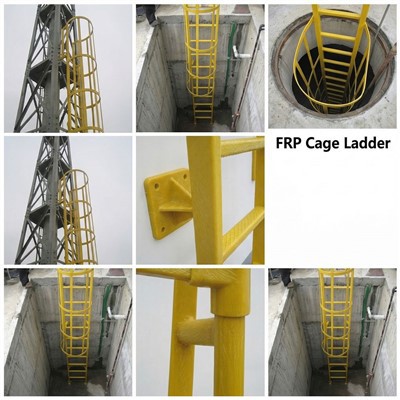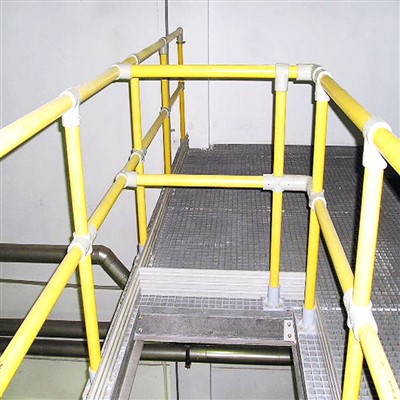
Hey there! As a supplier of FRP round tubes, I often get asked about the moisture absorption rate of these products. It's a crucial factor to consider, especially when you're using FRP round tubes in various applications. So, let's dive right into it and explore what the moisture absorption rate of FRP round tubes really means.
First off, what exactly is FRP? FRP stands for Fiber - Reinforced Plastic. It's a composite material made up of a polymer matrix reinforced with fibers, usually glass fibers. FRP round tubes are known for their high strength - to - weight ratio, corrosion resistance, and durability. But when it comes to moisture, things can get a bit tricky.
The moisture absorption rate of FRP round tubes refers to the amount of water that the tubes can absorb over a certain period of time. This rate is typically expressed as a percentage of the tube's original weight. For example, if a 100 - gram FRP round tube absorbs 1 gram of water, its moisture absorption rate is 1%.
Why does the moisture absorption rate matter? Well, excessive moisture absorption can have a negative impact on the performance of FRP round tubes. When the tubes absorb water, it can lead to swelling, which may cause dimensional changes. This is a big deal, especially in applications where precise dimensions are required. Additionally, moisture can also affect the mechanical properties of the tubes. It can reduce the strength and stiffness of the FRP, making it more prone to failure.
The moisture absorption rate of FRP round tubes is influenced by several factors. One of the main factors is the resin system used in the manufacturing process. Different resins have different levels of hydrophobicity (water - repelling ability). For instance, epoxy resins generally have a lower moisture absorption rate compared to polyester resins. Epoxy - based FRP round tubes are often preferred in applications where moisture resistance is critical, such as in marine environments or underground installations.
Another factor is the fiber type and content. Glass fibers are commonly used in FRP, but the way they are arranged and the amount of fiber in the composite can affect moisture absorption. A higher fiber content can sometimes reduce the overall moisture absorption rate because the fibers themselves are relatively resistant to water.
The manufacturing process also plays a role. If the FRP round tubes are not properly cured during production, they may have voids or pores that can allow water to penetrate more easily. A well - manufactured tube with a dense structure will have a lower moisture absorption rate.
Now, let's talk about how we measure the moisture absorption rate. There are standard test methods for this. One common method is to immerse the FRP round tubes in water for a specific period, usually 24 hours or 7 days. After the immersion, the tubes are removed, dried on the surface, and then weighed. The difference in weight before and after immersion is used to calculate the moisture absorption rate.
In real - world applications, the moisture absorption rate can vary depending on the environment. For example, in a humid climate, the tubes are more likely to absorb moisture over time. In a dry environment, the moisture absorption will be much lower. If the tubes are exposed to direct contact with water, such as in a water treatment plant or a swimming pool, the moisture absorption rate will be higher compared to applications where the tubes are protected from moisture.
As a supplier of FRP round tubes, we take great care in ensuring that our products have a low moisture absorption rate. We use high - quality resins and fibers, and our manufacturing process is carefully controlled to minimize voids and pores. We also offer different types of FRP round tubes to meet the specific needs of our customers. Whether you need tubes for a high - moisture environment or a more general application, we've got you covered.
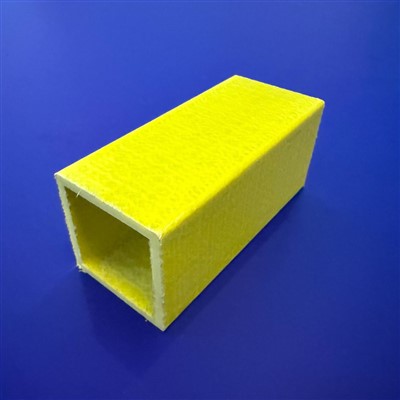
If you're in the market for FRP round tubes, you might also be interested in some of our other products. We also supply FRP Flat Bar, FRP Rectangular Tube, and FRP Solid Rod. These products also have their own unique properties and applications, and they share the same high - quality standards as our FRP round tubes.
When it comes to choosing the right FRP round tubes for your project, it's important to consider the moisture absorption rate. You need to assess the environment where the tubes will be used and select a product that can withstand the moisture conditions. If you're not sure which type of tube is best for your application, don't hesitate to reach out to us. Our team of experts is always ready to help you make the right decision.
In conclusion, understanding the moisture absorption rate of FRP round tubes is essential for ensuring the long - term performance of your project. By choosing high - quality tubes with a low moisture absorption rate, you can avoid potential problems such as swelling and reduced mechanical properties. If you're interested in purchasing FRP round tubes or any of our other products, we'd love to have a chat with you. Let's discuss your requirements and find the perfect solution for your project.


References
- ASTM D570 - Standard Test Method for Water Absorption of Plastics
- Composites World Magazine - Articles on FRP properties and applications