Hey there! As a supplier of FRP rectangular tubes, I often get asked a bunch of questions about what these tubes can and can't do. One question that's been popping up more and more lately is, "Can FRP rectangular tube be used for sound insulation purposes?" Well, let's dig into this topic and find out.
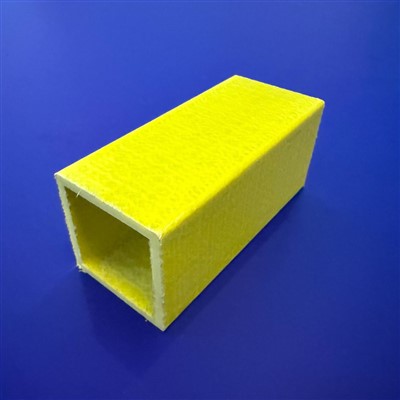
First off, let's understand what FRP (Fiber - Reinforced Plastic) rectangular tubes are. They're made by combining fibers, usually glass fibers, with a polymer resin. This results in a material that's strong, lightweight, and resistant to corrosion. These tubes come in various sizes and wall thicknesses, which makes them suitable for a wide range of applications, from construction to industrial uses.
Now, when it comes to sound insulation, we need to look at how sound works. Sound is basically vibrations that travel through the air or other mediums. To insulate against sound, a material needs to be able to absorb or block these vibrations.


Let's start by considering the properties of FRP rectangular tubes that might affect their sound - insulating capabilities. One of the key factors is the density of the material. FRP has a relatively low density compared to some traditional sound - insulating materials like concrete or thick wood. Generally, denser materials are better at blocking sound because they can absorb and dissipate the sound energy more effectively. However, the low density of FRP also means it's lightweight, which can be an advantage in some applications where weight is a concern.
Another aspect is the structure of the tube. The hollow design of a rectangular tube can play a role in sound insulation. Hollow spaces can act as air chambers, which can help to absorb and dampen sound waves. When sound waves enter the tube, they bounce around inside the hollow space, losing energy as they do so. This can reduce the amount of sound that passes through the tube.
But it's not all good news. FRP rectangular tubes aren't a one - size - fits - all solution for sound insulation. Their effectiveness depends on a few things. For example, the frequency of the sound matters. High - frequency sounds are generally easier to block than low - frequency sounds. FRP tubes might do a decent job at blocking high - frequency noise, but they may not be as effective against low - frequency rumbles.
Also, the installation of the tubes is crucial. If the tubes are not installed properly, there can be gaps or spaces that allow sound to leak through. A well - sealed installation is essential for maximizing the sound - insulating properties of FRP rectangular tubes.
Let's compare FRP rectangular tubes with some other common sound - insulating materials. For instance, Fiberglass H Beam has a different shape and structure. While it also has fiberglass as a component, its shape might not be as conducive to sound insulation as a rectangular tube. The H - beam's open design might allow sound to pass through more easily compared to the enclosed structure of a rectangular tube.
On the other hand, FRP Solid Rod is a solid structure. It doesn't have the hollow air chambers that can help with sound absorption like a rectangular tube. So, in terms of sound insulation, the rectangular tube might have an edge over the solid rod.
FRP Square Tube is quite similar to the rectangular tube. The main difference is the shape. The square tube might have different sound - insulating properties depending on how it's used and installed. But generally, both rectangular and square tubes can be considered for sound - insulation projects.
In some real - world scenarios, FRP rectangular tubes can be used for sound insulation. For example, in industrial settings where there's a lot of machinery noise, these tubes can be used to create partitions or enclosures. By installing them properly and using additional sound - absorbing materials in combination, they can help to reduce the noise levels.
In construction, they can be used in building facades or interior partitions. The lightweight nature of FRP makes it easier to install compared to heavier materials, and it can still provide a certain level of sound insulation.
However, it's important to note that if you need a high - level of sound insulation, FRP rectangular tubes might need to be used in conjunction with other sound - insulating materials. For example, adding acoustic foam or other sound - absorbing panels inside the tube or around it can significantly improve the overall sound - insulating performance.
So, can FRP rectangular tubes be used for sound insulation purposes? The answer is yes, but with some limitations. They can provide a certain level of sound insulation, especially in applications where weight is a concern and a moderate level of noise reduction is required.
If you're interested in using FRP rectangular tubes for your sound - insulation project, or if you have any questions about our products, don't hesitate to reach out. We're here to help you make the right choice for your specific needs. Whether it's for an industrial project, a construction job, or something else, we've got the expertise and the products to support you.
References
- "Fiber - Reinforced Plastics: Materials, Manufacturing, and Design" by P.K. Mallick
- "Sound and Acoustics" by David E. Hall