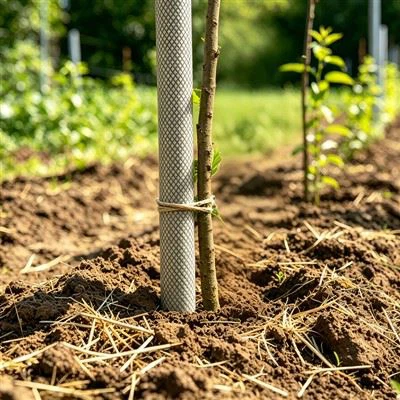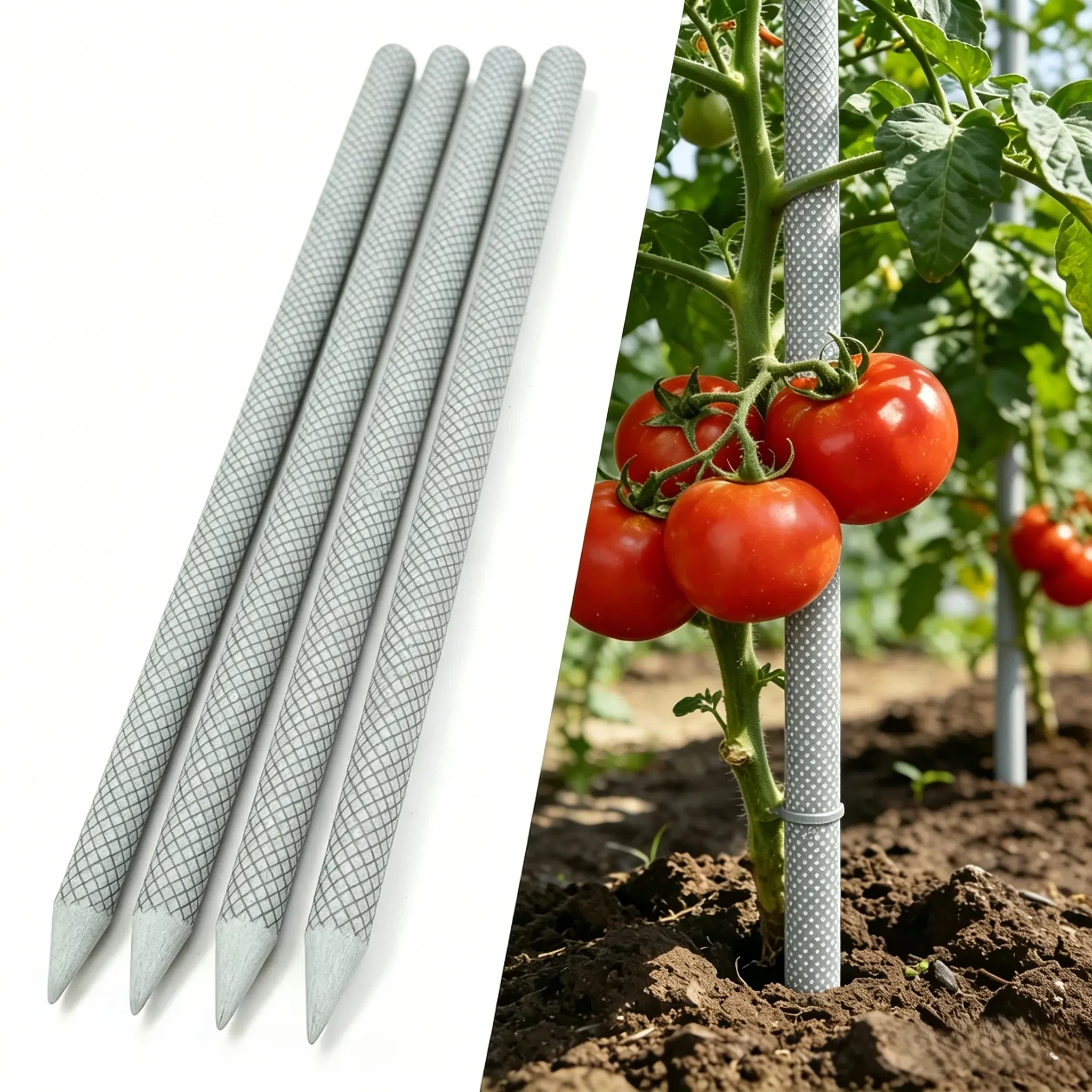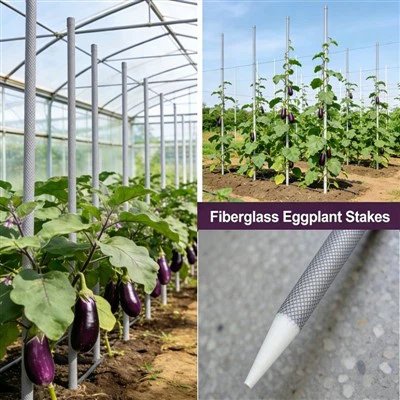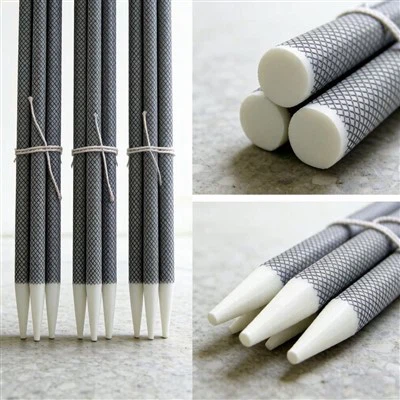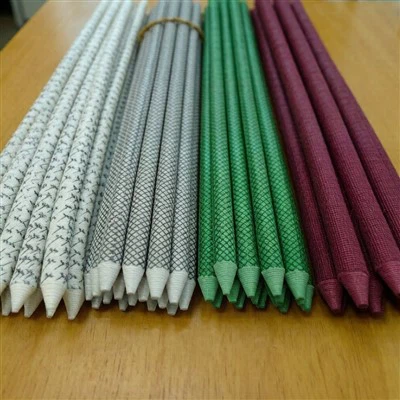
Support materials include support poles, binding materials, padding, and connectors. Support poles include fir poles, eucalyptus poles, bamboo poles, galvanized steel pipes, etc. Materials should be economical, aesthetically pleasing, sturdy, durable, and environmentally friendly, and should be treated for corrosion and insect resistance. Binding materials should have good toughness and corrosion resistance, such as steel wire (with a flexible sheath), hemp rope, palm rope, rubber bands, and binding straps. Padding should be corrosion-resistant and anti-aging, such as burlap, rubber sheets, and non-woven fabric; the thickness when wrapping the tree trunk should not be less than 0.5 cm. Connectors should be uniform, aesthetically pleasing, corrosion-resistant, and strong enough to meet connection requirements, such as collars, end caps, and scaffolding fasteners.
The support method should be selected according to the tree size and site conditions. Triangular supports are suitable for trees with a diameter at breast height (DBH) of less than 15cm and a height of less than 6m; four-corner supports are suitable for tall trees; soft supports are suitable for even taller trees; soft supports combined with four-corner supports are suitable for larger trees or specially selected trees; row supports are suitable for trees or species easily toppled when planted in groups.
Technical requirements include support height, angle, and direction. The support height for evergreen trees should be no less than 2/3 of the trunk height, and for deciduous trees, no less than 1/2 of the trunk height. The angle between the support pole and the trunk should ideally be 30°–45°. One support pole of a triangular support should be positioned facing the prevailing wind; the support poles of four-corner supports and soft supports should be positioned at right angles.
The installation process and specifications include determining the support method, material preparation and processing, trunk protection, installation and overlapping, fixing, inspection, and reinforcement. Installation must be completed before the basic backfilling and watering of the trees. It is strictly forbidden to use nails to directly fix the support poles to the trunk, and it is strictly forbidden to cut and use large-sized support poles. The bottom of the support rod can be fixed by padding with bricks or stones, or by fixing it to an anchor pile buried at least 30cm underground. Binding should be done using a herringbone double-ended tying method .
Quality requirements: The support should be firm, safe, not tilted, and not prone to sag. Aesthetic requirements: The overall appearance should be beautiful, neat, and clean; the support materials, colors, and angles of rows or patches of trees should be uniform.