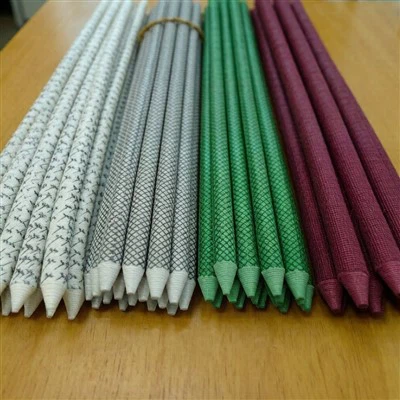
Fiberglass profiles, a structural material made of glass fiber reinforced plastic (GFRP), are widely used in construction, chemical, transportation, and environmental protection fields due to their high strength, lightweight, and corrosion resistance. Their implementation standards are crucial for ensuring product quality, performance, and safety. While these standards may vary between countries and regions, they typically cover aspects such as material composition, physical properties, chemical properties, manufacturing processes, and testing methods.
International Standards
Internationally, standards for fiberglass profiles may differ depending on the application field. For example, in the construction industry, organizations such as ASTM (American Society for Testing and Materials) and ISO (International Organization for Standardization) have developed a series of standards for fiberglass profiles, such as ASTM D3917 "Specification for Fiberglass Reinforced Thermosetting Plastic Tubes" and ISO 14692 "Fiberglass Reinforced Plastic Tubes for the Oil and Gas Industry." These standards detail the manufacturing requirements, testing methods, and performance indicators for fiberglass profiles.
Domestic Standards In China, the standards for fiberglass profiles are mainly formulated by the Standardization Administration of China (SAC) and relevant industry associations. Common standards include:
GB/T Standards: Such as GB/T 21238-2007 "Glass Fiber Reinforced Plastic Sand-Filled Pipes". This standard specifies the classification, requirements, test methods, and inspection rules for glass fiber reinforced plastic sand-filled pipes (a common type of fiberglass profile), applicable to piping systems transporting water and other non-corrosive liquids.
JC/T Standards: Such as JC/T 838-2014 "Glass Fiber Reinforced Cement (GRC) Lightweight Porous Partition Wall Panels". Although this standard mainly targets GRC materials, fiberglass profiles are also used in building partitions and other fields, and its manufacturing and inspection methods have some reference value for fiberglass profiles.
Industry-Specific Standards: Different industries may formulate specific fiberglass profile standards according to their own needs. For example, the chemical industry may focus more on the corrosion resistance of the profiles and therefore formulate more stringent chemical performance testing standards.