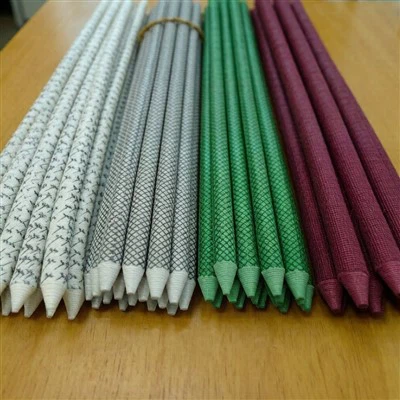
Fiberglass standard profiles, due to their lightweight, high strength, corrosion resistance, and good insulation, are widely used in construction, chemical, power, transportation, and environmental protection fields, making them an ideal alternative to traditional metal materials.
These profiles are continuously produced using a pultrusion process, resulting in standardized cross-sectional shapes (such as I-beams, angle steel, square tubes, and channel steel). They possess excellent mechanical properties and environmental adaptability, making them suitable for long-term structural and functional components.
It is used to manufacture insulating components, cable protection pipes, distribution boxes, radomes, antenna covers, etc., utilizing its excellent electrical insulation and high-frequency wave transmission properties.
It is also used to manufacture highway sign base plates (anti-theft, corrosion-resistant, high-strength), railway vehicle interior parts (such as window frames and roof panels), and automotive parts (engine hoods, bumpers).
It is used to manufacture corrosion-resistant brackets, platforms, guardrails, pipes, valves, etc., and can withstand strong corrosive media such as hydrochloric acid, chlorine, and acids and alkalis.
It is used as structural components, decorative materials, guardrails, walkways, air conditioner brackets, louvers, etc.; in building renovations, it replaces traditional metal or wood, with a lifespan of up to 75 years and virtually maintenance-free operation.