In the realm of construction, the choice of materials can significantly influence the success of a project. One material that has been gaining traction in recent years is the FRP (Fiberglass Reinforced Plastic) square tube. As a supplier of FRP square tubes, I am often asked whether these tubes are suitable for construction projects. In this blog, I will delve into the characteristics, advantages, and potential applications of FRP square tubes to help you make an informed decision.
Understanding FRP Square Tubes
FRP square tubes are composite materials made by combining fiberglass fibers with a polymer resin. This combination results in a material that offers a unique set of properties. Fiberglass provides high strength and stiffness, while the polymer resin protects the fibers and gives the tube its shape. The manufacturing process involves pultrusion, a continuous process where the fiberglass is pulled through a resin bath and then through a heated die to form the square shape.
Advantages of FRP Square Tubes in Construction
1. High Strength-to-Weight Ratio
One of the most significant advantages of FRP square tubes is their high strength-to-weight ratio. Compared to traditional materials like steel and aluminum, FRP square tubes can offer comparable strength while being much lighter. This makes them easier to handle and transport, reducing labor costs and the need for heavy equipment during installation. For example, in a large - scale construction project where materials need to be lifted to great heights, the lightweight nature of FRP square tubes can make the installation process more efficient.
2. Corrosion Resistance
FRP square tubes are highly resistant to corrosion, which is a major concern in many construction environments. Unlike metal tubes that can rust when exposed to moisture, chemicals, or harsh weather conditions, FRP square tubes can withstand these elements without deteriorating. This makes them ideal for applications in coastal areas, chemical plants, and wastewater treatment facilities. For instance, in a wastewater treatment plant, where the tubes are constantly exposed to corrosive chemicals and water, FRP square tubes can have a much longer service life compared to metal alternatives.
3. Electrical Insulation
FRP is an excellent electrical insulator. This property makes FRP square tubes suitable for construction projects where electrical safety is a priority. In electrical substations or buildings with sensitive electronic equipment, using FRP square tubes can help prevent electrical accidents and interference. For example, in a data center, where the presence of electrical cables and equipment is extensive, FRP square tubes can be used as structural supports without the risk of electrical conductivity.
4. Design Flexibility
FRP square tubes can be easily customized to meet specific project requirements. They can be cut, drilled, and shaped using standard tools, allowing for a high degree of design flexibility. This means that architects and engineers can create unique and complex structures using FRP square tubes. Whether it's a curved structure or a structure with non - standard dimensions, FRP square tubes can be fabricated to fit the design.
5. Low Maintenance
Due to their corrosion resistance and durability, FRP square tubes require minimal maintenance. Unlike metal tubes that may need regular painting or coating to prevent rust, FRP square tubes can maintain their appearance and performance over a long period with little upkeep. This reduces the long - term costs associated with the project.
Applications of FRP Square Tubes in Construction
1. Building Frames
FRP square tubes can be used as structural members in building frames. Their high strength and light weight make them suitable for both small - scale and large - scale construction projects. In low - rise buildings, FRP square tubes can provide the necessary support while reducing the overall weight of the structure. In high - rise buildings, they can be used in combination with other materials to create a more efficient and cost - effective structure.
2. Handrails and Guardrails
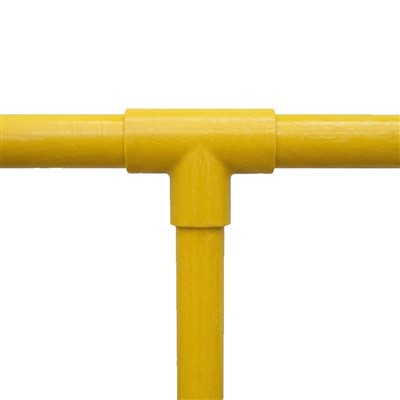
In public buildings, commercial spaces, and industrial facilities, handrails and guardrails are essential for safety. FRP square tubes are an ideal choice for these applications due to their corrosion resistance and high strength. They can be easily installed and customized to match the aesthetic requirements of the building. For example, in a shopping mall, FRP square tube handrails can provide a modern and durable look.
3. Greenhouses
Greenhouses require a structure that can withstand various environmental conditions while providing support for plants. FRP square tubes are well - suited for this application. Their corrosion resistance allows them to withstand the high humidity and moisture levels inside a greenhouse, and their light weight makes them easy to install. Additionally, the design flexibility of FRP square tubes allows for the creation of unique greenhouse structures.


4. Bridges and Walkways
In some cases, FRP square tubes can be used in the construction of small bridges and walkways. Their high strength - to - weight ratio and corrosion resistance make them a viable alternative to traditional materials. For example, in a park or a nature reserve, a FRP square tube bridge can provide a lightweight and durable crossing solution.
Comparison with Other Materials
1. Steel
Steel is a widely used material in construction. While it has high strength, it is heavy and prone to corrosion. FRP square tubes, on the other hand, are lighter and more corrosion - resistant. In terms of cost, the initial cost of FRP square tubes may be higher than steel, but the long - term savings in maintenance and transportation costs can make them a more cost - effective option.
2. Aluminum
Aluminum is also a lightweight material, but it has lower strength compared to FRP square tubes. Additionally, aluminum can be more expensive than FRP in some cases. FRP square tubes offer a good balance between strength, weight, and cost, making them a competitive choice for construction projects.
Potential Limitations
While FRP square tubes have many advantages, they also have some potential limitations. One of the main limitations is their relatively high initial cost compared to some traditional materials. However, as mentioned earlier, the long - term savings in maintenance and other costs can offset this initial investment. Another limitation is that FRP square tubes may have lower fire resistance compared to some materials like steel. In applications where fire safety is a major concern, additional fire - retardant treatments may be required.
Conclusion
In conclusion, FRP square tubes are a suitable choice for many construction projects. Their high strength - to - weight ratio, corrosion resistance, electrical insulation, design flexibility, and low maintenance make them a valuable material in the construction industry. Whether it's for building frames, handrails, greenhouses, or bridges, FRP square tubes can offer a reliable and cost - effective solution.
If you are considering using FRP square tubes in your construction project, I encourage you to explore our range of products. We also offer other FRP profiles such as FRP Flat Bar, FRP Rectangular Tube, and FRP T Profile. Feel free to contact us to discuss your specific requirements and start a procurement negotiation. We are committed to providing high - quality products and excellent customer service to meet your construction needs.
References
- "Fiberglass Reinforced Plastic (FRP) Composites in Construction" by ACI Committee 440
- "Handbook of FRP Composites for Civil and Structural Engineering" by S. K. Saha and A. K. Deb