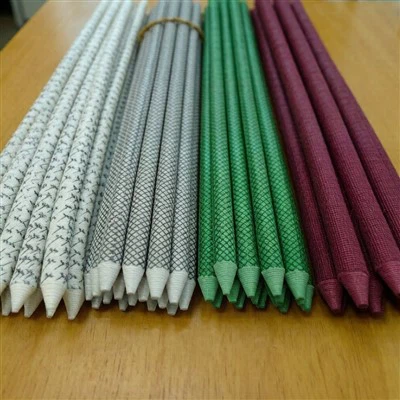
The core features of FRP tent poles are their lightweight yet high strength, corrosion resistance, good insulation, excellent elasticity, and relatively low cost, making them one of the most common support structure materials in mid-to-low-end outdoor tents.
Made of a composite of fiberglass and resin, they offer sufficient strength while maintaining good flexibility, effectively absorbing wind impact and suitable for the use of three-season tents in normal environments.
Lightweight and high-strength, easy to carry. With a density approximately 1/4 that of steel, their moderate weight makes them easy to pack and carry individually.
Their tensile strength is close to that of carbon steel; a standard 8.5mm diameter FRP pole can withstand 30–40 kg of lateral pressure, meeting the wind resistance needs of general camping.
Excellent flexibility and resilience: Resilient to bending under stress, it can be repeatedly bent and quickly return to its original shape, effectively cushioning the impact of gusts of wind.
When used with a tent, pre-tensioning creates a stable dome structure, enhancing overall wind resistance.
Good corrosion and aging resistance: Highly resistant to atmospheric conditions, moisture, and acid/alkali/salt environments, it is not prone to rust or rot, making it suitable for long-term outdoor use.
The UV coating treatment slows down resin aging, but prolonged exposure to sunlight will still cause strength reduction (bending strength decreases by approximately 18.6% after 1000 hours of strong UV radiation).
Safe and insulating, safer in thunderstorms: Its non-conductive properties make it safer to use in thunderstorms, as it will not become a lightning conductor, improving safety during camping.
Economical and practical, high cost-performance ratio: Compared to aluminum alloy or carbon fiber poles, FRP poles have lower manufacturing costs and are widely used in entry-level and mid-range tents, significantly reducing the overall tent price.