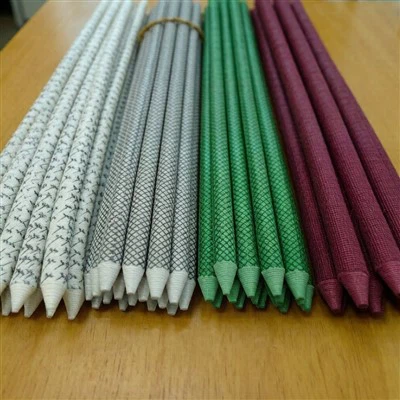
During use, attention must be paid to environmental adaptability, load-bearing limits, installation specifications, and daily maintenance to ensure stable performance and service life.
As a high-performance composite material, fiberglass grating possesses advantages such as corrosion resistance, lightweight, and high strength. However, under special working conditions, appropriate protective measures are still required to avoid structural damage or safety hazards due to improper use.
1. Due to its low density and light weight, fiberglass grating is prone to floating in areas with high groundwater levels. Anti-buoyancy measures such as installing ballast blocks or rainwater runoff diversion must be considered.
2. When installing tees or repairing pipe cracks on existing fiberglass grating, conditions similar to those in a factory are required. The resin and fiber cloth used during construction need 7-8 hours to cure, which is generally difficult to achieve on-site.
3. Existing underground pipeline detection equipment mainly targets metal pipelines. Non-metallic pipeline detection instruments are expensive, making them undetectable after fiberglass grating is buried. Subsequent construction units are highly likely to damage the pipelines during construction.
4. Fiberglass grating has poor UV protection. Exposed fiberglass grating uses a 0.5mm thick resin-rich layer and UV absorber (processed in-house) to delay aging. However, over time, the resin-rich layer and UV absorber will deteriorate, affecting its service life.